What if I told you that a single document — something you could put together in a few hours — could save your family years of legal headaches, tens of thousands of dollars in court fees, and immeasurable emotional stress?
That document is called an estate plan.
When most people hear “estate planning,” they think of billionaire families, private bankers, and intricate legal trusts. But that’s a myth. Estate planning isn’t about how much money you have. It’s about making sure the people you love are taken care of, and that your assets go where you want them to go — without the government or courts deciding otherwise.
If you’re in your 30s, 40s, or even older, you probably have enough assets — a home, a retirement account, a life insurance policy, maybe a small business — that your family would struggle if something happened to you unexpectedly. Estate planning is how you protect them.
In this final guide of the retirement cluster, I’ll walk you through the estate planning basics you need to know. You’ll learn what a will and trust really are, why you need powers of attorney, how to avoid probate, and the simple steps to get your estate plan in order.
https://wealthytraders.online/retirement-planning-in-your-30s/
This article pairs perfectly with everything you’ve learned so far. The retirement savings you’ve been building in Retirement Planning in Your 30s → and 401(k) vs IRA →, and the Social Security benefits you plan to maximize → — none of it means much if your family can’t access it easily when you’re gone.
Let’s make sure your hard work is protected.
What Is Estate Planning?
Estate planning is the process of arranging for the management and disposal of your estate (everything you own) during your lifetime and after your death. It answers questions like:
- Who gets your house, car, and bank accounts?
- Who manages your money if you become incapacitated?
- Who makes medical decisions if you can’t speak for yourself?
- Who takes care of your minor children if you pass away?
- How can your family avoid unnecessary taxes and legal fees?
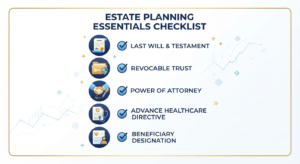
An estate plan typically includes:
- A will
- A trust (sometimes)
- A durable power of attorney
- A healthcare directive (also called a living will)
- Beneficiary designations on retirement accounts and life insurance
Think of it as a safety net for your life’s work. It ensures your wishes are honored, and it spares your family from having to guess or fight during the hardest time of their lives.
Why Estate Planning Matters (Even If You’re Not Rich)
People often say, “I don’t have enough assets to need an estate plan.” But that’s like saying “I don’t need a seatbelt because I’m not planning to crash.” Estate planning isn’t about your wealth — it’s about giving your family a smoother path forward.
Here’s what happens if you die without a will (called dying intestate):
- The state’s laws decide who gets your assets, not you.
- Your spouse may not get everything you think they will.
- Your children’s inheritance can be tied up in legal limbo.
- Your family may need to go through probate — a court process that can take months or years and cost thousands of dollars.
Even worse: if you become incapacitated (say, a car accident or severe illness), and you don’t have a power of attorney, your family may need to go to court to become your legal guardian. This is expensive, invasive, and extremely stressful.
Estate planning is one of the most loving things you can do for your family. It’s not about you — it’s about them.
The 5 Key Pieces of an Estate Plan
Let’s break down the essential documents you’ll need.
1. Last Will and Testament
A will is the foundational document of your estate plan. It states:
- Who inherits your assets (beneficiaries).
- Who manages your estate (executor).
- Who becomes the guardian of your minor children.
Without a will, the state makes these decisions for you.
Important: A will goes through probate. That means the court supervises the distribution of your assets, and it becomes a matter of public record.
2. Revocable Living Trust
A trust is a legal arrangement where you transfer ownership of assets to a trustee (often yourself) who manages them for your beneficiaries.
- Revocable means you can change or cancel it at any time.
- Assets in a trust avoid probate — they pass directly to your beneficiaries without court involvement.
- Trusts can also provide privacy (probate is public; trusts are not).
- A trust can manage assets for minor children or spendthrift beneficiaries over time.
But trusts aren’t for everyone. They cost more to set up and require transferring assets into the trust. For a young person with moderate assets, a will might be enough. Later, as your estate grows, a trust becomes more valuable.
3. Durable Power of Attorney (Financial)
This document appoints someone you trust to manage your financial matters if you become unable to do so.
What it covers:
- Paying your bills
- Managing bank accounts
- Filing taxes
- Selling or managing real estate
- Making investment decisions
Without a power of attorney, your family may need a court-appointed conservator. That’s a costly, public process you’ll want to avoid.
4. Healthcare Directive / Living Will
Also called an “advance healthcare directive,” this document specifies your medical wishes in case you can’t communicate them.
Two parts:
- Living Will — states what life-sustaining treatments you do or don’t want (e.g., ventilation, feeding tubes, CPR).
- Healthcare Power of Attorney — names someone to make medical decisions on your behalf, and speak with doctors.
5. Beneficiary Designations
Often overlooked, but arguably the most important.
Retirement accounts (401(k), IRA), life insurance policies, and payable-on-death (POD) bank accounts all have beneficiary forms. These override your will in most cases.
- If you name a beneficiary, that person gets the asset directly, without probate.
- If you name no beneficiary (or an outdated one), the asset goes through your will or state rules.
Action: Review your beneficiary designations every year, especially after major life events like marriage, divorce, birth of a child, or death of a loved one.
Will vs Trust: Which One Do You Need?
This is one of the most common questions in estate planning. Here’s a simple comparison:
| Feature | Will | Revocable Living Trust |
|---|---|---|
| Probate required | Yes (unless small estate) | No |
| Cost to set up | Less expensive ($300–$1,000) | More expensive ($1,500–$3,000+) |
| Privacy | Public record | Private |
| Takes effect | Only after death | Immediately (as soon as you fund it) |
| Incapacity protection | No | Yes (successor trustee can manage) |
| Control after death | One-time distribution | Can control when/where beneficiaries receive money |
| Minor children guardian | Yes | Yes (can also hold assets in trust) |
So which one do you need?
- A will is essential for everyone. It’s the minimum. It names guardians for your children and covers the assets that don’t have beneficiary designations.
- A trust becomes valuable if: you own real estate, have a high net worth, want privacy, want to avoid probate, or have specific wishes for how beneficiaries receive money (e.g., staggered distributions).
My recommendation: Start with a will. If your situation is more complex or your estate is larger, consult an estate attorney about adding a trust.
The Estate Planning Checklist: Your Step-by-Step Action Plan
Ready to get started? Here’s a practical checklist you can work through:
Step 1: Take Inventory of Your Assets and Wishes
- List all assets: real estate, bank accounts, investments, retirement accounts, life insurance, vehicles, personal property, and digital assets (crypto, online accounts, social media).
- List your debts (so your executor knows what to pay).
- Write down your wishes for assets and guardianship.
Step 2: Choose Your Key People
- Executor — the person who administers your will. (Should be responsible, organized, and willing.)
- Trustee — if you have a trust, the person managing it after you’re gone.
- Guardian for minor children — someone who shares your values and is able/willing to raise your children.
- Power of Attorney — someone to manage your finances if incapacitated.
- Healthcare Agent — someone to make medical decisions if you can’t.
Choose backups, too. Life changes.
Step 3: Create Your Documents
You can use:
- Online services like Trust & Will, Nolo, or LegalZoom (affordable and simple).
- An estate planning attorney (best for complex situations).
Tip: Whatever method you choose, make sure each document is legally valid in your state. And don’t forget to sign and date them with witnesses/notary (requirements vary by state).
Step 4: Fund Your Trust (If You Have One)
If you created a trust, you must transfer asset ownership into the trust’s name. If you don’t, the trust is empty and your assets still go through probate.
Step 5: Update Beneficiary Designations
Review and update beneficiaries on all retirement accounts, life insurance policies, and POD accounts. This is where mistakes cause huge problems.
Step 6: Store Documents Safely and Inform Your Family
- Keep originals in a fireproof safe or safety deposit box.
- Tell your executor, agent, and family where everything is.
- Provide copies to your attorney and key people.
Step 7: Review Your Plan Periodically
Estate planning isn’t “set and forget.” Review your plan:
- After marriage or divorce
- After the birth or death of a loved one
- After a significant increase/decrease in assets
- When you move to a different state
- Every 3–5 years
Common Estate Planning Mistakes to Avoid
Learn from others’ mistakes. These can cost your family thousands and cause heartbreak.
1. Not Having a Will at All
The biggest mistake is doing nothing. If you die intestate, the state decides everything. Your spouse and children could end up in a painful legal process.
Fix: Create at least a simple will this year.
2. Forgetting to Update Beneficiary Designations
An ex-spouse could inherit your life insurance or 401(k) if you forget to change the beneficiary. This is more common than you think.
Fix: Review your beneficiary forms after every major life event.
3. Naming a Guardian Who Isn’t Ready
You want someone who shares your values and is financially stable. Don’t just pick a favorite family member without asking them first.
Fix: Have a real conversation with your chosen guardian. Make sure they agree.
4. Not Funding Your Trust
A trust doesn’t work unless you move assets into it. Many people create a trust but never transfer their house or accounts, so the trust is pointless.
Fix: Follow through and title assets in the name of your trust.
5. Keeping Your Plan a Secret
Your family can’t follow a plan they know nothing about. If they don’t know where your documents are, or who your executor is, they’ll be lost.
Fix: Share the location of your documents and express your wishes verbally.
6. Ignoring Digital Assets
Your online accounts — from PayPal to crypto to social media — are part of your estate. Without instructions, your family may never be able to access them.
Fix: Create a digital asset list with passwords, stored securely.
7. Thinking It’s Only for Rich People
Even a modest estate can burden your family with probate costs and delays. Estate planning is about protecting your loved ones, regardless of the size of your bank account.
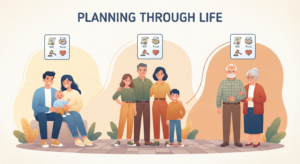
Estate Planning at Different Life Stages
What you need in your 20s looks very different from what you need in your 60s.
In Your 20s and 30s
- Simple will
- Healthcare directive
- Power of attorney
- Beneficiary designations
Key focus: If you have minor children, naming a guardian is the most critical piece. If you own a home, a trust might become useful.
In Your 40s and 50s
- All of the above
- Consider a revocable living trust if your estate is significant
- Update your plan after children turn 18 (they’re no longer minors)
- Review if you start a business or acquire rental properties
In Your 60s and Beyond
- Ensure your plan is current
- Consider long-term care planning (Medicaid, etc.)
- Look into gift strategies and charitable giving
- Make sure your documents align with your Social Security and retirement plans
Whatever stage you’re at, the basics are the same. The complexity just grows with your assets.
https://wealthytraders.online/401k-vs-ira/
Estate Planning and Your Passive Income Assets
If you’ve been following this series, you might be building passive income from dividend stocks, digital products, or rental properties. These are assets that need estate planning too.
- Dividend portfolios: Your brokerage account beneficiary designations determine who inherits these investments.
- Rental properties: If you own real estate, it must be transferred through your will or trust.
- Digital products: Your eBooks, online courses, and website income may have ongoing revenue after you pass. Consider naming a digital executor and setting up succession for your online business.
- Affiliate income: Same as above — someone needs to manage your website and affiliate accounts.
If you’re building these assets, include them in your estate plan. Your hard work shouldn’t evaporate when you’re gone.
Resources from this series can help:
- Dividend Stocks for Passive Income →
- Creating Digital Products →
- Rental Income 101 →
- Affiliate Marketing for Passive Income →
Frequently Asked Questions
Is estate planning only for rich people?
No. Everyone with assets, minor children, or specific wishes needs at least a will. It’s about caring for your family and avoiding unnecessary costs.
What is probate and why should I avoid it?
Probate is the court process of distributing your assets after death. It’s public, time-consuming, and expensive (often 3-7% of estate value). A will alone doesn’t avoid probate — a trust does.
Do I need both a will and a trust?
Yes. A will covers assets not in your trust, names guardians for children, and handles your personal property. A trust avoids probate and provides more control.
What happens if I die without a will?
Your state’s intestacy laws decide who inherits. Your spouse and children may not receive what you expected, and your family will face a lengthy legal process.
How often should I update my will?
Update it after major life events (marriage, divorce, birth, death, relocation), or at least every 3-5 years.
Can I create an estate plan online?
Yes. Services like Trust & Will, Nolo, and LegalZoom are affordable and legal. For complex estates, hire an experienced lawyer.
What is a living will?
It’s a legal document that states your preferences for medical treatment if you’re incapacitated and can’t communicate. It’s part of an advance healthcare directive.
How do I protect my digital assets?
Create a digital asset inventory with account names, passwords, and instructions. Store it securely (e.g., password manager) and tell your executor.
Final Thoughts
You’ve worked hard to build your wealth, protect your future, and set up passive income streams. But all of that work can be undone if you don’t have a plan for when you’re no longer here to manage it.
Estate planning is not about death — it’s about life. It’s about making sure the people you love have one less burden to carry. It’s about ensuring your money and belongings go to the people and causes you care about. And it’s about leaving a legacy of responsibility and love.
https://wealthytraders.online/fire-movement-explained/
You don’t need to be rich. You don’t need to be old. You just need to care enough to take a few simple steps.
Your Action Plan:
- Inventory your assets and wishes.
- Create your will (at minimum) and other key documents.
- Name or update your beneficiaries.
- Store documents somewhere safe and tell your family.
- Review your plan every year or after key life events.
If you’ve read through this entire series — from passive income ideas to retirement planning to Social Security and now estate planning — you’ve given yourself a serious financial education. Don’t stop now. The next step is just a few clicks away.
If you need help deciding what to do next, start with the documents that matter most. A simple will, a power of attorney, and a healthcare directive can be done online this weekend. Your family deserves it.
And remember to revisit the other articles in this cluster to keep building your financial foundation:
- Retirement Planning in Your 30s →
- 401(k) vs IRA →
- The FIRE Movement Explained →
- Maximize Social Security Benefits →
Now go make a plan. It’s the most loving gift you can give to the people you care about.