If you’ve ever downloaded a budgeting spreadsheet, filled it out for exactly one week, and then never opened it again, you’re not alone. Most budgets fail not because the person is bad with money, but because the budget itself was built wrong from the start — too rigid, too complicated, or too disconnected from how that person actually lives.
This guide walks you through how to create a monthly budget that survives contact with real life: unexpected car repairs, a friend’s birthday dinner, the month rent goes up. By the end, you’ll have a working system, not just a spreadsheet you’ll abandon by the 10th.
If you want a broader starting point before diving into budgeting specifically, our complete personal finance guide for beginners covers how budgeting fits into the bigger money picture.
Why Most Budgets Fail (Before We Fix Yours)
Before building anything, it helps to know what usually breaks:
- Too restrictive. Cutting every “want” to zero works for about two weeks before burnout sets in.
- No buffer for irregular expenses. Car registration, birthdays, and annual subscriptions don’t happen monthly, so they get forgotten — and then feel like emergencies.
- Set once, never adjusted. A budget isn’t a contract; it’s a living plan that should change as your income or life changes.
- Tracking is too much work. If updating your budget takes an hour every week, you’ll stop doing it.
Keep these four failure points in mind — every step below is designed to avoid them.
Step 1: Calculate Your Real Monthly Income
Start with what actually lands in your bank account, not your salary on paper.
- Salaried employees: Use your take-home pay after taxes and deductions, not your gross salary.
- Hourly or variable income: Average your last 3 months of income and use the lowest month as your baseline. This keeps your budget realistic instead of optimistic.
- Multiple income sources: Add up everything — a day job, freelance work, or a side hustle. If you’re building a second income stream, our guide on realistic side hustles you can start this month can help.
Write this number down. This is the ceiling everything else has to fit under.
Step 2: List Every Expense — Fixed and Variable
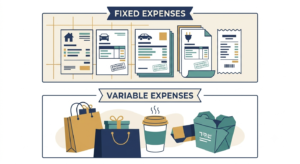
Separate your spending into two categories.
Fixed Expenses
These stay the same (or close to it) every month:
- Rent or mortgage
- Loan or credit card minimum payments
- Insurance premiums
- Subscriptions (streaming, gym, software)
Variable Expenses
These change month to month:
- Groceries
- Gas or transportation
- Dining out
- Entertainment
- Miscellaneous shopping
Pull the last two months of bank and credit card statements and actually categorize what you spent — not what you think you spent. Most people underestimate food delivery and small subscriptions by a wide margin. This step alone is often the most eye-opening part of the process.
Step 3: Choose a Budgeting Method That Fits Your Personality
There’s no single “correct” budgeting method — the best one is the one you’ll actually follow.
- 50/30/20 rule: Split income into 50% needs, 30% wants, 20% savings/debt. Good for beginners who want simple guardrails. We break this down fully in our 50/30/20 budget rule guide.
- Zero-based budgeting: Every dollar gets assigned a job until income minus expenses equals zero. Best for people who like precision and control. Full walkthrough here: zero-based budgeting explained.
- Envelope system: Cash (or digital “envelopes”) allocated to categories; when it’s gone, it’s gone. Works well for people who overspend on cards.
If you’re not sure which fits, start with 50/30/20 — it’s the easiest to maintain long-term and still gives structure.
Step 4: Build in a Buffer for Irregular Expenses
This is the step most budgets skip, and it’s the reason they collapse in month three.
Make a list of expenses that don’t happen every month: car maintenance, annual subscriptions, holiday gifts, medical copays. Add up their yearly total, divide by 12, and set that amount aside monthly in a separate “irregular expenses” fund. When the car needs new tires in August, the money is already there instead of wrecking your budget.
This buffer works hand-in-hand with an emergency fund, but they’re not the same thing — an emergency fund covers true emergencies (job loss, major medical bills), while this buffer covers expenses you know are coming but don’t happen monthly. If you haven’t started one yet, see our guide on how to build an emergency fund from scratch.
Step 5: Pick a Tracking Method You’ll Actually Use

A budget only works if you track it. Options range from a simple notebook to full apps:
- Spreadsheet: Full control, no cost, but requires manual updating.
- Budgeting app: Automatically syncs with your bank, categorizes spending, and sends alerts. If you want to skip the manual work, our roundup of the best free budgeting apps in 2026 compares the top options.
- Pen and paper: Old-fashioned, but for some people the physical act of writing it down improves follow-through.
Pick based on how much friction you can tolerate. The “best” tracking method is the one you’ll still be using in six months.
Step 6: Set Realistic Limits, Not Ideal Ones
When you set your category limits, base them on your actual spending from Step 2, adjusted slightly downward — not on what you wish you spent. If you’ve been spending $500/month on groceries, don’t set a $250 limit on day one. Try $450, hit it consistently, then tighten it the following month. Budgets that ask for too much change too fast are the ones people abandon.
Step 7: Review and Adjust Every Month
Set a recurring 15-minute appointment with yourself at the end of each month. Compare what you planned against what actually happened, and adjust next month’s numbers accordingly. Some categories will need more room; others less. This monthly check-in is what turns a one-time budget into an ongoing system — and it’s the single habit that separates people who stick with budgeting from people who quit.

A Simple Example
Here’s what this looks like for someone earning $3,500/month take-home, using the 50/30/20 method:
| Category | Amount | % of Income |
|---|---|---|
| Needs (rent, utilities, groceries, insurance) | $1,750 | 50% |
| Wants (dining out, entertainment, shopping) | $1,050 | 30% |
| Savings & debt payoff | $700 | 20% |
From that $700, they might split it further: $200 to an irregular expenses buffer, $300 toward an emergency fund, and $200 toward extra debt payments using the debt snowball or avalanche method.
Common Budgeting Mistakes to Avoid
- Forgetting annual expenses like insurance renewals or subscriptions billed yearly
- Not adjusting for irregular income months
- Making the budget too complicated, with 20+ micro-categories that take forever to track
- Giving up after one bad month instead of adjusting and continuing
- Not aligning the budget with actual goals — a budget without a purpose (debt payoff, savings, a specific goal) is easy to abandon
Frequently Asked Questions
How much of my income should go toward savings? A common starting target is 20%, following the 50/30/20 rule, but this depends on your income, debt load, and goals. If 20% isn’t realistic yet, start with 5–10% and increase it as your income grows or debt decreases.
What if my income changes every month? Base your budget on your lowest-earning month from the past 3–6 months. In higher-income months, put the extra toward savings or debt rather than increasing your baseline spending.
Do I need a budgeting app, or is a spreadsheet enough? Either works. A spreadsheet is free and fully customizable; an app saves time through automatic tracking. Choose based on which one you’re more likely to actually maintain.
How often should I update my budget? Review it at the end of every month, and make small adjustments as needed. A full rebuild is rarely necessary — most months just need minor tweaks to category limits.
What’s the difference between a budget and a financial plan? A budget manages your month-to-month cash flow. A financial plan is the bigger picture — your goals for debt payoff, investing, and long-term savings. The budget is the tool that funds the plan.
Final Thoughts
A monthly budget doesn’t need to be perfect — it needs to be realistic and reviewed regularly. Start with your real income, track your actual spending, choose a method that fits your habits, and build in room for the expenses that don’t happen every month. The goal isn’t a budget you follow flawlessly; it’s a system you can stick with long enough for it to actually change your finances.
Once your budget is in place, the next step is usually building a safety net — read our guide on how to build an emergency fund from scratch to make sure a single unexpected expense doesn’t undo your progress.
This article is for educational purposes only and is not financial advice.